
In the USA, it has been estimated by the Centers for Disease Control
and Prevention that as many as 1 in 4 consumers will suffer from a
foodborne illness each year, resulting in an annual incidence of 76
million cases, 325,000 hospitalizations and 5,000 deaths (Mead et al,
1999). If contaminated poultry products were linked to only 10% of
human cases of food poisoning, this would equate to an estimated 500
deaths and 7.6 million cases each year. The USDA has done everything
possible to reduce foodborne pathogens at the processing level.
Currently, more emphasis is being placed on reducing harmful bacteria
at the grower's level.
Water sources available to livestock have been identified as important
biosecurity and agroterrorism concerns. Many foodborne pathogens, in
particular Campylobacter, Salmonella, E. coli, Pseudomonas, and,
Staphylococcus, can be spread throughout the flock via the drinking
water. Protective measures or Water Quality Assurance Programs need to
be in place in order to reduce vulnerability to microbial infection.
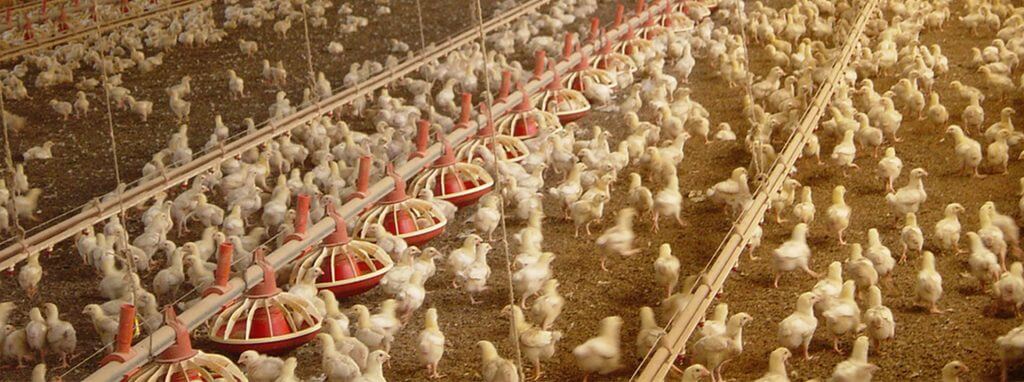
It is imperative that poultry have access to a clean, healthy water
supply. Young, rapidly growing birds often consume twice as much water
as they do feed. Water is a critical component of the flock's growth
and development. Water softens the feed in the crop, serves as a
carrier of feed moving through the digestive tract, and acts as an aid
in several digestive processes. It is also a key component of the blood
and lymph systems that are vital for a healthy immune system.
Over a period of time, any water delivery system will be affected by
foreign material build up and contamination. Minerals such as ,
magnesium, iron, and manganese will form scale. Rust, dirt, and algae
will attach to the inside of water lines as well. Water soluble
additives used in poultry drinking water often contain sugar or sugar
additives that can promote the growth of a biofilm inside the water
line. It is the buildup of these materials on the inner surface of the
service lines that will provide a place for microorganisms to take hold
and multiply. Organic materials and additives will supply nutrients for
microbial growth and will have a negative impact on medication and
vaccines delivered through the water lines. Every time the bird
consumes water, it will become exposed to an ever increasing microbial
load. Other negative effects of microbial growth include poor feed
conversion, downgrading of carcasses, increased mortality and increased
condemnation. This will affect the profitability of the integrator and
the farmer.
What are biofilms? Biofilms are a complex matrix of bacteria, fungi,
and algae bound together in a sticky gel of polysaccharide and other
organic contaminants attached to a surface. The bacteria produce a
slime layer in which they live that anchors them firmly to a surface
and which provides a protective environment to grow and reproduce.
Biofilms generally form on any wet surface and are consequently found
in many types of environments, especially poultry drinking water
systems. Biofilms harbor harmful microorganisms such as Campylobacter,
Listeria, Salmonella, E. Coli, Pseudomonas, and Staphylococcus. The
existence of biofilm reduces the effectiveness of common disinfectants.
As previously stated, poultry watering systems harbor biofilms. Water
sources, such as well or surface water that contain high mineral
content, iron bacteria, or coliform, may produce biofilms. The use of
vitamins or other sugar based products (Gatorade, Kool-Aid, etc.) is a
food source for the microorganisms and will promote the formation of
biofilms as well. Problems associated with biofilms in the poultry
drinking water include a decrease in poultry survival time, lowered egg
production, deterioration of equipment, and clogging of nipple
drinkers. Utilizing public water systems or a applying a disinfectant
throughout the grow-out (Chlorine gas, chlorine dioxide/anthium
dioxide, iodine, or ozone) will not make a farm immune to these
biofilm.
Traditional disinfectants do not effectively penetrate the biofilm
matrix. The disinfectant must have access to the bacteria in order to
be effective. Most disinfectants are active against planktonic
(unattached) microorganisms but are not effective against
microorganisms in biofilm. In order to penetrate and remove biofilms,
it is necessary to hydrolyze the biofilm matrix. Hydrolysis breaks up
the biological material and exposes the microorganisms within it to the
killing action of disinfecting agents. Below are some products commonly
utilized in the industry that are not effective against biofilm:
Quats
are surface antimicrobials. They have no chemical reactivity with
biofilm polysaccharide and are bound up by negative charge on the
biofilm surface. Quats leave much of the biofilm matrix intact and do
not remove or destroy endotoxins.
Chlorine Dioxide is a strong
oxidizing agent. Chlorine Dioxide reacts with the surface of the
biofilm but provides no hydrolytic breakdown of the biofilm matrix or
mechanical removal.
Peracetic Acid is active on
surface regions of biofilm, but is rapidly neutralized by catalase.
There is no hydrolysis or mechanical breakdown of biofilm matrix
polysaccharides.
Citric acid, muriatic acid,
sodium hydrogen sulfate, and other acidifiers used to lower pH are
neither approved biocides (ability to kill microorganisms) nor
biodispersants (ability to penetrate and remove biofilms). These
products are effective at removing scale as discussed later.
It is recommended that
poultry water lines be cleaned and disinfected with a product that has
EPA-registered claims to penetrate and remove biofilm, and to kill
biofilm bacteria. Such a product has passed EPA-required tests that
establish the efficacy of the product in removing and penetrating
biofilm from surfaces and water lines. The above-mentioned quaternary
ammonium products, chlorine dioxide, and peracetic acid do not have
EPA-registered claims to penetrate and remove biofilms. Some products
may carry an EPA registration for a being biocide and are labeled as
cleaners. Only evaluation of the product's label will determine which
product is EPA approve for biofilm removal or if it simply kills
microorganisms.
What is scale and how is it caused? Hard water is usually associated
with well water in regions where the rocks contain a large proportion
of minerals such as calcium and magnesium, principally as bicarbonates,
and sometimes iron and manganese. Over time, water containing these
minerals will attach to plumbing and form scale. Harder scale is
comprised of iron and manganese and is more difficult to remove. Softer
scale is comprised mostly of calcium and magnesium and is easier to
remove. The pH of the water will also play an important role in the
formation of scale, where water with a higher pH (over 7.0) will form
harder scale at a faster rate. Water with a lower pH will tend to have
a mineral "sludge" present in the lines.
There are several concerns associated with mineral scale. Economic
impacts to the grower include clogged plumbing and regulators, pressure
loss, and nipple drinkers sticking or leaking. Over time, this is a
substantial cost when one considers the time and money of replacement.
Pretreated water (i.e. filtered or softened water), is a cost effective
means of reducing/preventing future problems.
Scale has a rough surface that contains pitting, cracks, and crevices
which can harbor microorganisms. Disinfectants such as chlorine and
iodine simply pass over these cracks and crevices and the
microorganisms will continue to flourish. Therefore, additional
treatment measures must be used.
To remove the scale, the pH of the water must be reduced by adding an
acid to dissolve the mineral scale. However, the biofilm has to be
removed first. An acid can not fully penetrate and will not hydrolyze
the biofilm and thus can not dissolve the scale. Consequently, a
product with EPA-registered claims to penetrate and remove biofilm must
be used before scale can be dissolved. Follow the instruction of the
acid product manufacturer for proper use and safety guidelines. The
influent pH of the water should also be considered. Water with a
natural pH of 8.5 requires the use of more acid than water with a
natural pH of 7.2.
There is a common misconception that chlorinated water does not require
any maintenance and lines do not have to be flushed. This is absolutely
false. Public water, treated well or surface water may reduce the
severity of contamination in the lines. However, the lines still remain
susceptible to biofilm formation. Regardless of the water quality or
water source, it is highly encouraged to clean the water lines between
flocks. The grower will realize significantly higher productivity and
profits over time with a proactive versus a reactive program.
Any farm that has included water in its Biosecurity program and follows
the quality assurance measures set in place by the company's
veterinarian will have a distinct advantage over those that do not.
Poultry production is more competitive than ever before and clean water
will surely make a difference in the profitability for the grower.