

Your swimming pool should be a place where family, friends, guests, and residents can relax, not somewhere they leave with itchy skin, burning eyes, or complaints about a strong chlorine smell.
If swimmers regularly experience skin irritation after using your pool, the problem may not be chlorine itself. In many cases, it’s a sign that your pool relies too heavily on chlorine or that the water chemistry is out of balance.
Whether you own a residential pool or manage a commercial aquatic facility, understanding why chlorine-related skin irritation occurs is the first step toward creating healthier, more comfortable water. In this guide, we’ll explain what causes chlorine rash, how proper water management can help prevent it, and why many pool owners are reducing their dependence on traditional chlorine with advanced copper ionization technology.
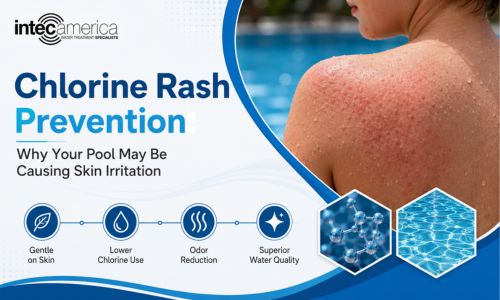
What is Chlorine Rash?
Chlorine rash is a common term used to describe skin irritation that can occur after swimming in chlorinated water. Symptoms may include:
- Dry, itchy skin
- Redness or mild inflammation
- Burning or stinging sensations
- Increased skin sensitivity after swimming
While chlorine can contribute to skin irritation, the issue is often related to excessive chlorine levels, chloramine buildup, or poorly balanced pool water rather than chlorine alone.
For pool owners, these symptoms are more than just an inconvenience—they’re indicators that the pool’s water quality may need attention.
Why Your Pool May Be Causing Skin Irritation
High Chlorine Levels
Chlorine plays an essential role in disinfecting pool water, but excessive chlorine concentrations can strip the skin of its natural protective oils.
When chlorine levels remain consistently higher than recommended, swimmers may experience:
- Dry or itchy skin
- Irritated eyes
- Brittle hair
- Faded swimwear
Maintaining chlorine within the proper range is critical for both sanitation and swimmer comfort.
Chloramine Buildup
One of the most common causes of swimmer discomfort isn’t free chlorine—it’s chloramines.
Chloramines form when chlorine reacts with contaminants introduced by swimmers, including:
- Sweat
- Sunscreen
- Body oils
- Cosmetics
- Urine and other organic matter
These combined compounds are often responsible for:
- Strong “chlorine” odors
- Red, irritated eyes
- Skin irritation
- Poor overall swimming comfort
Ironically, a strong chlorine smell often indicates that your pool needs better water management rather than additional chlorine.
Poor Water Balance
Proper water chemistry involves much more than maintaining chlorine levels.
When pH, alkalinity, circulation, or filtration are not properly managed, chlorine becomes less effective and pool owners often compensate by adding more chemicals.
Poorly balanced water can contribute to:
- Increased chlorine demand
- Faster chemical consumption
- Skin and eye irritation
- Cloudy water
- More frequent maintenance
Balanced water chemistry supports cleaner, clearer water while helping reduce unnecessary chemical usage.
Signs Your Pool May Be Over-Reliant on Chlorine
If you’re experiencing any of the following, your pool may be relying too heavily on chlorine as its primary sanitation method:
- Guests frequently complain about itchy skin.
- Swimmers experience red or irritated eyes.
- Your pool has a persistent chemical odor.
- Hair feels dry after swimming.
- Swimsuits fade more quickly than expected.
- You’re constantly adding chlorine.
- Water chemistry requires frequent adjustment.
- Maintaining water quality feels like a constant challenge.
These signs often point to underlying water management issues that can be addressed with a more balanced sanitation strategy.
Why Traditional Chlorine Isn’t Always the Best Long-Term Solution
Chlorine has been the standard pool sanitizer for decades, and it remains an important part of effective pool care. However, relying on chlorine alone can create a cycle of increasing chemical demand.
As contaminants enter the pool, chlorine is consumed more rapidly. Pool owners often respond by adding additional chlorine, which may temporarily restore sanitizer levels but doesn’t always address the underlying causes of water quality issues.
Over time, this approach can result in:
- Higher chemical costs
- More frequent water balancing
- Increased maintenance
- Reduced swimmer comfort
- Greater potential for skin and eye irritation
A more balanced sanitation approach helps maintain excellent water quality while reducing dependence on high chlorine concentrations.
A Smarter Way to Prevent Chlorine Rash Starts with Better Pool Water
The most effective way to reduce chlorine-related skin irritation isn’t treating swimmers after they leave the pool, it’s improving the water they’re swimming in.
Copper ionization provides an additional layer of water treatment by continuously releasing controlled levels of copper ions into the pool. These naturally occurring ions help control algae and support overall water sanitation, allowing pool owners to maintain excellent water quality while using significantly less chlorine than traditional chlorine-only systems.
Reducing chlorine demand can provide several benefits, including:
- Softer-feeling water
- Less noticeable chemical odor
- Improved swimmer comfort
- Reduced skin and eye irritation
- More balanced pool chemistry
Instead of relying solely on higher chlorine levels, pool owners can create a healthier swimming environment through a more comprehensive water treatment strategy.
Why Pool Owners Choose Intec America
At Intec America, we believe pool sanitation should focus on both water quality and swimmer comfort.
Our copper ionization systems are designed to help residential and commercial pool owners maintain clean, clear water while reducing dependence on traditional chlorine programs.
Depending on pool conditions and proper maintenance practices, pool owners may experience benefits such as:
- Reduced chlorine consumption
- Softer-feeling water that’s gentler on skin and eyes
- Fewer complaints about chlorine odor
- Lower ongoing chemical costs
- Less frequent chemical adjustments
- Improved water clarity
- Better overall swimming comfort
By supporting a balanced approach to pool sanitation, Intec America’s solutions help create a more enjoyable experience for swimmers while simplifying ongoing pool maintenance.
FAQs:
1. Is chlorine rash dangerous?
Answer: Chlorine rash is usually not dangerous and often causes mild skin irritation, itching, or redness. However, if symptoms are severe, persistent, or accompanied by swelling or difficulty breathing, seek medical attention immediately.
2. How long until chlorine rash goes away?
Answer: Most mild chlorine rashes improve within a few hours to 2–3 days after avoiding further chlorine exposure. Keeping the skin moisturized and avoiding scratching can help speed recovery.
3. Chlorine rash treatment at home
Answer: Rinse your skin thoroughly with fresh water after swimming, apply a fragrance-free moisturizer, and use a cool compress to relieve itching. If irritation persists, an over-the-counter hydrocortisone cream may help—consult a healthcare provider if symptoms worsen.
4. How can I prevent chlorine rash after swimming?
Answer: Shower before and after swimming, moisturize your skin, and swim in pools with properly balanced water chemistry. Reducing excessive chlorine levels and chloramine buildup can also help minimize skin irritation.
5. Why do I get a rash after swimming even when chlorine levels seem normal?
Answer: Skin irritation isn’t always caused by chlorine alone. Chloramines, improper pH balance, or sensitivity to other pool contaminants can also trigger redness, itching, and discomfort.
Recent Blog Posts
- https://www.intec-america.com/blog/how-to-lower-chlorine-in-pools-naturally-and-safely/
- https://www.intec-america.com/blog/how-safe-is-your-pool-tips-for-preventing-waterborne-illnesses/
- https://www.intec-america.com/blog/is-it-time-for-pool-remodeling-recognize-the-signs-explore-solutions/
- https://www.intec-america.com/blog/how-hard-water-affects-your-pool-and-what-to-do-about-it/
- https://www.intec-america.com/blog/tips-to-avoid-costly-pool-maintenance-mistakes/