

Maintaining a swimming pool is about more than keeping the water looking clean. Proper pool water chemistry is essential for creating a safe, healthy, and enjoyable swimming environment. When your pool water is correctly balanced, it helps prevent algae growth, protects pool equipment, improves water clarity, and reduces the amount of chemicals needed to keep the water sanitary.
On the other hand, unbalanced water can quickly lead to cloudy water, scaling, corrosion, skin irritation, and expensive maintenance problems. Understanding the basics of pool water chemistry allows pool owners to identify problems early and maintain crystal-clear water throughout the swimming season.
Whether you own a residential swimming pool or manage a commercial facility, this guide explains everything you need to know about keeping your pool water balanced.
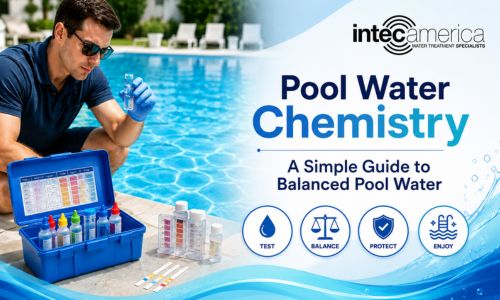
What is Pool Water Chemistry?
Pool water chemistry is the process of maintaining the correct balance of essential water parameters to keep your swimming pool clean, safe, and comfortable. These parameters include pH, free chlorine (or sanitizer), total alkalinity, calcium hardness, and cyanuric acid (stabilizer), all of which play an important role in maintaining healthy pool water.
When these water levels stay within their recommended ranges, your pool remains clear, hygienic, and easier to maintain. Properly balanced pool water also helps prevent algae growth, protects pool equipment from damage, reduces chemical use, and provides a safer, more enjoyable swimming experience.
Why Is Balanced Pool Water Important?
Balanced pool water offers much more than an attractive appearance. Proper water chemistry improves swimmer safety, extends the life of pool equipment, and reduces maintenance costs.
Some of the biggest benefits include:
- Crystal-clear swimming pool water
- Better sanitation and bacteria control
- Reduced algae growth
- Less eye and skin irritation
- Longer-lasting pumps, heaters, and filters
- Lower chemical consumption
- Easier pool maintenance
When water chemistry is neglected, even a clean-looking pool can contain harmful microorganisms or become difficult to manage.
Recommended Pool Water Chemistry Levels
| Pool Water Parameter | Ideal Range | Why It Is Important |
|---|---|---|
| pH Level | 7.2–7.6 | Maintains swimmer comfort and allows sanitizers to work effectively. |
| Free Chlorine | 1–3 ppm | Eliminates bacteria, viruses, and other harmful contaminants. |
| Total Alkalinity | 80–120 ppm | Helps stabilize pH levels and prevents sudden fluctuations. |
| Calcium Hardness | 200–400 ppm | Protects pool surfaces and equipment from corrosion or scale buildup. |
| Cyanuric Acid (CYA) | 30–50 ppm | Shields chlorine from UV rays, helping it remain effective for longer. |
Testing these levels regularly helps maintain healthy and balanced pool water.
Common Causes of Unbalanced Pool Water
Several everyday factors can affect your pool water chemistry.
Heavy Pool Usage
Frequent swimming introduces sweat, sunscreen, body oils, and other contaminants into the water, increasing the demand for sanitizers and making it harder to maintain balanced pool chemistry.
Rain and Storms
Rainwater can dilute pool chemicals and introduce dirt and debris, causing pH, alkalinity, and sanitizer levels to become unbalanced.
High Temperatures
Hot weather speeds up chlorine evaporation and promotes algae growth, requiring more frequent water testing and chemical adjustments.
Poor Filtration
An inefficient or dirty filtration system reduces water circulation, allowing contaminants to accumulate and negatively affect pool water quality.
Incorrect Chemical Dosing
Adding too much or too little of a chemical can disrupt pool water balance, leading to cloudy water, scaling, or reduced sanitizer effectiveness.
Lack of Regular Testing
Skipping routine water testing makes it difficult to detect chemical imbalances early, which can result in costly maintenance and poor water quality.
How to Balance Pool Water Step by Step
Maintaining balanced pool water doesn’t have to be complicated. Following a simple routine can help prevent most common problems.
Step 1: Test Your Pool Water
Use a reliable pool water testing kit at least two to three times each week during the swimming season.
Step 2: Adjust the pH Level
If the pH is too low, the water becomes acidic and may corrode pool equipment. If it’s too high, chlorine becomes less effective.
Step 3: Balance Total Alkalinity
Proper alkalinity helps prevent rapid pH fluctuations and keeps the water stable.
Step 4: Check Calcium Hardness
Maintaining the correct calcium level protects pool surfaces while preventing scaling.
Step 5: Maintain Proper Sanitizer Levels
Ensure sanitizer levels remain within the recommended range to eliminate harmful bacteria and microorganisms.
Step 6: Keep the Filtration System Running
Regular filtration removes debris and supports effective water circulation throughout the pool.
Common Pool Water Chemistry Mistakes to Avoid
Many pool owners unknowingly create water balance problems by making avoidable mistakes.
- Adding Too Much Chlorine
Using excessive chlorine can cause strong chemical odours, skin and eye irritation, and increase your pool maintenance costs without improving water quality. - Ignoring pH Levels
Even if chlorine levels are correct, an unbalanced pH can reduce sanitizer effectiveness and make the water uncomfortable for swimmers. - Skipping Regular Water Testing
Failing to test your pool water regularly can allow minor chemistry issues to develop into costly maintenance problems and poor water quality. - Neglecting Pool Filters
Dirty or clogged filters restrict water circulation and filtration, making it difficult to maintain clean and properly balanced pool water. - Mixing Chemicals Incorrectly
Mixing pool chemicals or adding them improperly can create unsafe reactions and disrupt your pool water chemistry. Always follow the manufacturer’s instructions for safe application.
Avoiding these common mistakes will help keep your pool water balanced, extend the life of your pool equipment, and reduce long-term maintenance costs.
How Copper Ionization Helps Maintain Balanced Pool Water
Maintaining balanced pool water becomes much easier when using advanced sanitization technology such as Copper Ionization.
Unlike traditional systems that rely heavily on chlorine, Copper Ionization continuously releases controlled copper ions into the water to help control algae and many harmful microorganisms.
This approach offers several advantages:
- Reduces chemical usage and maintenance costs
- Eliminates the need for chlorine, shock treatments, stabilizer, and algaecides.
- Improves water clarity
- Helps prevent algae growth
- Supports stable water chemistry
- Reduces chemical handling
- Creates a more comfortable swimming environment
When combined with proper filtration and routine testing, Copper Ionization provides a reliable solution for maintaining healthier pool water.
Why Choose Intec America for Pool Water Sanitization?
At Intec America, we are committed to helping pool owners achieve cleaner, safer and healthier water with innovative sanitization solutions.
Our advanced Copper Ionization Systems are designed to reduce chemical usage while improving overall water quality for residential and commercial swimming pools.
With Intec America’s technology, you can enjoy:
- Lower chemical consumption
- Crystal-clear pool water
- Effective algae prevention
- Reduced maintenance time
- Lower operating costs
- Improved swimmer comfort
- Reliable long-term performance
Whether you manage a home pool, hotel, resort, apartment complex, or commercial aquatic facility, our solutions provide an efficient and environmentally responsible way to maintain balanced pool water.
Conclusion
Balanced pool water chemistry is the foundation of a clean, safe, and enjoyable swimming pool. Regular testing, proper water balance, and consistent maintenance help prevent algae, cloudy water, equipment damage, and swimmer discomfort while extending the life of your pool.
For pool owners looking to reduce chemical use without compromising water quality, Intec America’s Copper Ionization Systems offer a smarter solution. By supporting balanced pool water, reducing chlorine demand, and improving overall water clarity, our advanced sanitization technology helps you enjoy healthier swimming with less maintenance all year round.
Recent Blog Posts
- https://www.intec-america.com/blog/freshwater-pool-system-the-natural-alternative-to-traditional-pool-chemicals/
- https://www.intec-america.com/blog/how-to-lower-chlorine-in-pools-naturally-and-safely/
- https://www.intec-america.com/blog/how-safe-is-your-pool-tips-for-preventing-waterborne-illnesses/
- https://www.intec-america.com/blog/is-it-time-for-pool-remodeling-recognize-the-signs-explore-solutions/
- https://www.intec-america.com/blog/how-hard-water-affects-your-pool-and-what-to-do-about-it/
- https://www.intec-america.com/blog/tips-to-avoid-costly-pool-maintenance-mistakes/
- https://www.intec-america.com/blog/pool-closing-checklist-everything-you-need-to-know/