

Chlorine is one of the most common sanitizers used to keep swimming pools clean. It helps control bacteria, algae plus other unwanted microorganisms. However using more chlorine than needed can create a different water-quality problem. too much chlorine in swimming pool can cause swimmer discomfort while affecting the overall balance of pool water.
Many pool owners assume that a stronger chlorine smell means cleaner water. This is not always true. A pool with too much chlorine may produce a strong chemical odor while swimmers may experience red eyes dry skin or irritation. Understanding why chlorine levels rise is important for maintaining comfortable water.
This guide explains the warning signs causes risks plus practical solutions for too much chlorine in pool conditions.
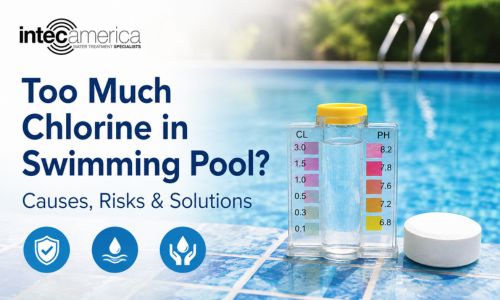
Symptoms of Too Much Chlorine in Pool
Recognizing high chlorine early can help prevent unnecessary discomfort. When chlorine in pool too high becomes a problem several noticeable symptoms may appear.
Common signs include:
- Strong chemical smell around the pool
- Red or irritated eyes
- Dry skin after swimming
- Itching or uncomfortable skin
- Unpleasant swimming experience
- Respiratory discomfort in sensitive swimmers
A pool with too much chlorine may sometimes smell strongly because chlorine reacts with contaminants in the water. A strong smell does not automatically mean the water is properly sanitized.
If swimming pool chlorine too high is suspected the first step should be testing the water instead of adding more chemicals.
Why Does Chlorine Get Too High in a Pool?
Several maintenance mistakes can cause chlorine levels to rise beyond the recommended range. The most common cause is adding more sanitizer than the pool actually requires.
Typical causes include:
- Over-dosing chlorine during routine maintenance.
- Measuring chemicals inaccurately.
- Adding chlorine repeatedly without testing first.
- Using shock treatment too frequently.
- Misreading chemical test results.
- Failing to consider pool size when calculating dosage.
- Poor maintenance records that result in repeated chemical applications.
When chlorine high in pool water is caused by repeated dosing the problem can continue until the added sanitizer naturally decreases.
Weather plus sunlight also influence chlorine levels. Direct sunlight can break down free chlorine over time. A covered pool may retain chlorine longer because it receives less sunlight. This means the same dosing routine may not produce the same result in every pool.
Risks of Excess Chlorine in Pool Water
Excess chlorine in pool water can affect both swimmers and pool equipment. The severity of these effects depends on the chlorine concentration and the duration of exposure.
Swimmers may experience dry skin irritated eyes and general discomfort. People who are sensitive to chlorine may also experience coughing or respiratory irritation especially in indoor pools with poor ventilation.
A pool with too much chlorine can also create maintenance concerns. Prolonged exposure to high sanitizer levels may contribute to the deterioration of certain pool materials. Pool covers liners seals and some equipment components can be affected when water chemistry remains outside the recommended range.
| Risk | Possible Effect |
|---|---|
| High chlorine exposure | Dry or irritated skin |
| Eye exposure | Redness and discomfort |
| Chlorine vapors | Coughing or respiratory irritation |
| Poor water balance | Equipment and surface damage |
The key point is simple: more chlorine does not always mean better water. Effective pool sanitation depends on maintaining the appropriate chemical balance for clean water and swimmer comfort.
How High Chlorine Affects Your Water Balance
Pool water chemistry involves several connected factors. Chlorine works alongside pH alkalinity calcium hardness plus other water parameters. When chlorine in pool too high occurs the sanitizer level may move outside the desired operating range.
Balanced water is important for swimmer comfort plus effective sanitation. If testing is skipped the owner may continue adding chemicals without knowing whether the water actually needs them.
Regular testing helps identify whether chlorine levels are appropriate. It also provides information about other chemistry parameters that can influence sanitizer performance.
A swimming pool chlorine too high situation should therefore be treated as a water-management issue rather than simply a chlorine issue. Testing gives pool owners the information required to make better treatment decisions.
How to Reduce Too Much Chlorine in Pool
If testing confirms too much chlorine in pool water the first step is to stop adding additional chlorine. Adding more sanitizer will increase the problem rather than solve it.
Allowing chlorine to naturally decrease can be an effective approach when levels are only moderately elevated. Sunlight can help break down free chlorine in outdoor pools. Running the circulation system can also help distribute the water evenly throughout the pool.
For high chlorine levels pool owners should follow appropriate water-treatment guidance. Swimming should be avoided until testing confirms that chlorine has returned to a suitable range.
Recommended steps include:
- Stop adding chlorine.
- Test the water using a reliable testing method.
- Keep the circulation system operating as appropriate.
- Allow sunlight to naturally reduce chlorine in outdoor pools.
- Retest the water before swimming.
- Correct other water chemistry issues when required.
If chlorine in pool too high remains after natural reduction professional pool service guidance can help determine the safest next step.
How to Prevent Too Much Chlorine in Pool
Prevention is easier than correcting a major chemical imbalance. A consistent testing routine can help pool owners understand how much sanitizer the water actually needs.
Avoid adding chlorine based only on smell or appearance. Always consider pool volume current test results recent chemical treatments plus environmental conditions.
Accurate measuring is equally important. Using the correct measuring equipment helps prevent accidental over-dosing. Keeping a simple maintenance record can also show how frequently chemicals are being added.
When chlorine high in pool conditions happen repeatedly it may be useful to review the entire sanitation strategy. A treatment system that reduces dependence on traditional chlorine may provide another approach to routine pool maintenance.
Why Choose Intec America for Pool Water Treatment?
Intec America provides pool water-treatment solutions focused on ionization technology. Its copper ionization approach uses copper ions as part of the pool sanitation process. This can help pool owners reduce their reliance on traditional chlorine-based treatment when used as part of an appropriate pool maintenance program.
For owners who regularly struggle with too much chlorine in swimming pool conditions a different sanitation strategy may be worth considering. Copper ionization can support pool water management while helping reduce the amount of traditional sanitizer required in suitable applications.
The goal is not simply to eliminate chlorine. The goal is to create a practical sanitation approach that supports cleaner water while improving swimmer comfort plus simplifying routine maintenance.
If swimming pool chlorine too high happens frequently it may indicate that the current treatment routine needs improvement. Intec America can provide an alternative approach for pool owners interested in copper ionization.
Recent Blog Posts
- https://www.intec-america.com/blog/freshwater-pool-system-the-natural-alternative-to-traditional-pool-chemicals/
- https://www.intec-america.com/blog/how-to-lower-chlorine-in-pools-naturally-and-safely/
- https://www.intec-america.com/blog/how-safe-is-your-pool-tips-for-preventing-waterborne-illnesses/
- https://www.intec-america.com/blog/is-it-time-for-pool-remodeling-recognize-the-signs-explore-solutions/
- https://www.intec-america.com/blog/how-hard-water-affects-your-pool-and-what-to-do-about-it/
- https://www.intec-america.com/blog/tips-to-avoid-costly-pool-maintenance-mistakes/
- https://www.intec-america.com/blog/pool-closing-checklist-everything-you-need-to-know/