

Keeping swimming pool water clean, clear, and free from algae requires regular maintenance and proper water treatment. For homeowners looking for affordable alternatives to traditional pool maintenance products, a solar pool ionizer has become an appealing option. These floating devices use solar energy to release copper ions into pool water, helping control algae growth.
But do solar pool ionizers really work, and can they replace conventional pool chemicals?
While solar-powered ionizers offer benefits such as easy installation, low upfront costs, and algae-control support, they also have limitations. Their performance depends on sunlight, electrode condition, and water chemistry. More importantly, they do not provide complete pool sanitation on their own.
This guide explains how solar pool ionizers work, their benefits and limitations, whether they can replace chlorine, and when an inline copper ionization system may be worth considering.
What Is a Solar Pool Ionizer?
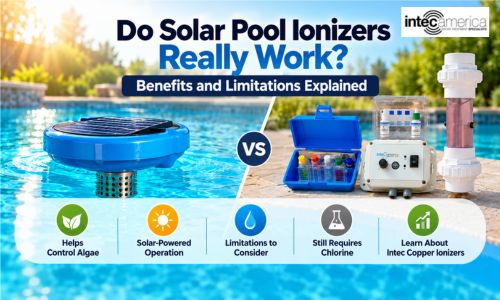
A solar pool ionizer is a floating water treatment device that uses sunlight to generate electricity and release copper ions into swimming pool water. These ions help inhibit algae growth, making the device a supplemental tool for pool maintenance.
A typical solar ionizer for a swimming pool consists of three main components:
- Solar panel: Captures sunlight and generates electrical power.
- Copper electrode: Releases copper ions into the pool water through an electrochemical process.
- Floating housing: Keeps the solar panel above the water while the electrode remains submerged.
Some models also include a secondary electrode, protective screen, or cleaning accessories.
Unlike inline systems installed in pool plumbing, a pool solar ionizer generally floats freely on the water’s surface. This makes it attractive to homeowners seeking a simple, relatively inexpensive way to supplement algae control without modifying existing pool equipment.
However, its primary purpose is algae control rather than complete water disinfection.
How Does a Solar Pool Ionizer Work?
Understanding how a solar pool ionizer works helps explain both its benefits and limitations.
The process typically involves five steps:
- Solar energy collection: The solar panel absorbs sunlight and converts it into electrical energy.
- Electrical activation: The generated current passes through the device’s electrode system.
- Copper ion release: Copper ions at the electrode undergo an electrochemical reaction, releasing copper ions into the water.
- Algae inhibition: Copper ions interfere with biological processes in algae, helping prevent or limit their growth.
- Water circulation: Normal pool circulation helps distribute the released ions throughout the swimming pool.
The effectiveness of a solar-powered pool ionizer depends on how much copper it releases and whether appropriate copper concentrations are maintained.
Because the device relies on sunlight, its ion production may decrease during cloudy weather, in shaded pools, or during periods of limited daylight.
Pool owners must also monitor water chemistry and maintain the electrode to ensure the device operates as intended.
Do Solar Pool Ionizers Really Work?
Yes, solar pool ionizers can help control algae growth when used correctly. However, they should be considered supplemental pool treatment devices rather than complete sanitation systems.
Copper ions have algae-inhibiting properties. When maintained at suitable concentrations, they can help reduce algae growth and support clearer pool water.
However, several factors influence performance:
- Sunlight availability: Adequate sunlight is necessary for consistent electrical generation.
- Electrode condition: Mineral deposits and electrode deterioration can affect copper ion production.
- Pool size: The ionizer must be appropriately rated for the pool’s water volume.
- Water chemistry: pH, copper concentration, and other water conditions influence effectiveness.
- Circulation: Proper water movement helps distribute copper ions throughout the pool.
It is also important to distinguish between algae control and sanitation. A pool may appear clear while still containing microorganisms that present health risks.
Solar pool ionizers do not provide the same rapid, broad-spectrum disinfection as an appropriately maintained pool sanitizer. Therefore, they should only be used in conjunction with a suitable sanitation method such as chlorine or bromine.
Benefits of Using Solar Pool Ionizers
Solar-powered pool ionizers offer several advantages, particularly for homeowners seeking an entry-level supplemental algae-control solution.
Solar-Powered Operation
One of the primary benefits is that the device operates using solar energy.
Most floating solar ionizers do not require an external electrical connection, dedicated wiring, or integration with the pool pump’s electrical system.
This makes them convenient for outdoor pools that receive sufficient sunlight.
Easy Installation and Use
A solar-powered ionizer for pools generally requires minimal installation.
Homeowners typically assemble the electrode components according to the manufacturer’s instructions and place the device in the swimming pool.
Unlike inline ionizers, floating devices usually do not require modifications to pool plumbing.
Affordable Initial Investment
Many entry-level solar pool ionizers are available at relatively low prices compared with permanently installed copper ionization systems.
This affordability makes them appealing to homeowners who want to explore copper ionization without committing to a larger equipment investment.
However, purchase price should not be the only consideration. Electrode replacement, cleaning, water testing, and ongoing sanitizer expenses also contribute to ownership costs.
Helps Control Algae Growth
Copper ions can inhibit algae growth when maintained at appropriate concentrations.
For pool owners who frequently experience algae problems, a properly operated solar ionizer may provide additional algae-control support alongside routine sanitation and filtration.
Results will depend on pool conditions and the device’s actual copper ion output.
Potential Reduction in Certain Pool Chemicals
Because copper ions help control algae, some pool owners may be able to reduce their reliance on supplemental algaecides.
However, this does not mean that a solar ionizer eliminates the need for chlorine or another suitable sanitizer.
Any changes to chemical treatment should follow water-test results, manufacturer instructions, and applicable pool safety requirements.
Limitations of Solar Pool Ionizers
Although solar pool ionizers offer convenience and affordability, understanding their limitations is essential before purchasing one.
Performance Depends on Sunlight
Solar ionizers rely on sunlight to generate electricity.
Shaded pool areas, cloudy weather, and shorter winter days may reduce the amount of energy available for copper ion production.
This means the device’s output may fluctuate depending on environmental conditions.
Limited Control Over Copper Ion Output
Many inexpensive floating solar ionizers offer limited options for adjusting copper ion production.
This can make it more difficult to manage ion generation according to changing pool conditions.
By comparison, electronically controlled inline copper ionizers can provide adjustable output settings, allowing users to manage the ionization process more directly.
Regardless of the technology, copper levels still require regular testing.
Regular Electrode Cleaning and Replacement
Solar pool ionizers are not maintenance-free.
Over time, mineral deposits can accumulate on the electrodes, potentially reducing performance. Copper electrodes also gradually wear down as they release ions.
Homeowners should inspect, clean, and replace electrodes according to the manufacturer’s recommendations.
Copper Levels Require Monitoring
Maintaining appropriate copper concentrations is important for both performance and pool appearance.
Excessive copper levels can contribute to staining on pool surfaces and discoloration of hair.
Pool owners should regularly test copper concentrations and follow the ionizer manufacturer’s recommended operating range.
Not Every Device Is Suitable for Every Pool
Solar ionizers vary in their rated pool capacities and output capabilities.
A device suitable for a small residential swimming pool may not provide sufficient ion generation for a larger pool or one with demanding operating conditions.
The type of water being used can also make a difference in the performance of a solar powered ionizer. Saltwater pools have a higher conductivity than what is found in a typically chlorinated pools. The following is a short list or reported issues:
- Accelerated copper electrode consumption: Higher current can increase the rate at which copper dissolves, assuming the current is predominantly driving copper oxidation.
- Excessive copper concentrations: Without adequate control, increased copper release could contribute to staining or elevated dissolved copper levels.
- Circuit overload: If the design lacks appropriate current limiting, the higher electrical load could stress electronic components.
- Solar panel voltage collapse: Small solar panels have limited current output. Rather than supplying unlimited current, their voltage may decrease when the electrical load exceeds their capability.
- Variable ion production: Changes in sunlight, conductivity, electrode condition, and temperature can cause fluctuations in copper release.
Before purchasing, homeowners should consider pool volume, sunlight exposure, circulation, maintenance requirements, and the manufacturer’s specifications.
Can a Solar Pool Ionizer Replace Chlorine Completely?
No. A solar pool ionizer alone should not be considered a complete replacement for chlorine or another appropriate swimming pool sanitizer.
This is one of the most important distinctions homeowners should understand when evaluating solar ionization technology. The limited production of copper ions primarily help control algae. Chlorine and other approved sanitizers serve a different purpose: controlling disease-causing microorganisms and maintaining sanitary swimming conditions.
Although copper has antimicrobial properties, copper ionization alone does not provide the rapid, comprehensive disinfection or residual protection required for many swimming pool applications. Proper pool treatment also requires managing organic contaminants, oxidation, filtration, and water chemistry.
Solar pool ionizers should not be compared to inline electric pool ionization systems. The wattage of a floating solar ionization system ranges from 1-5 watts in comparison to an inline electrical ionization system which typically range from 12 watts on a small swimming pool to 48 watts for a larger residential pool. Higher wattages are required to rapidly increase and maintain levels sufficient copper levels to battle microbial contamination in a pool and replace chlorine.
Some products are advertised as chlorine-free or capable of significantly reducing chlorine consumption. However, such claims should be evaluated against independent performance evidence, manufacturer instructions, and applicable public health requirements.
A solar ionizer may help reduce the need for certain supplemental algae-control chemicals, but pool owners should not lower required sanitizer residuals simply because they use an ionizer.
The safest approach is to treat copper ionization as one component of a complete pool water treatment program.
Solar Pool Ionizer vs. Copper Ionizer: What’s the Difference?
Solar pool ionizers and electrically powered inline copper ionizers operate on a similar fundamental principle: both release copper ions into swimming pool water to help control algae.
The main differences involve their power source, installation, output control, and suitability for different applications.
| Feature | Solar Pool Ionizer | Copper Ionizer |
|---|---|---|
| Power Source | Solar energy | External electrical power |
| Installation | Floating device | Installed in pool circulation plumbing |
| Copper Output | Often limited adjustment | Adjustable output settings |
| Sunlight Dependency | Yes | No |
| Initial Investment | Generally lower | Higher |
| Pool-Size Options | Depends on model | Multiple residential and commercial models |
| Maintenance | Electrode cleaning and replacement | Self-cleaning, larger and longer lasting electrodes with less maintenance costs |
For homeowners seeking a more permanent solution, Intec America’s inline copper ionization systems offer an alternative to floating solar devices.
These systems are integrated into the pool’s circulation plumbing and allow users to adjust copper ion production rather than relying on available sunlight.
Intec America offers copper ionization solutions for different residential pool sizes and applications, along with product guidance and technical support.
While inline systems involve a higher initial investment and installation requirements, they may appeal to homeowners who value adjustable operation and permanent equipment integration.
Importantly, an inline copper ionizer should also be used within an appropriate pool sanitation program.
When Should You Consider Upgrading From a Solar Pool Ionizer?
A floating solar ionizer can be a convenient starting point for homeowners interested in copper ionization. However, changing pool requirements or maintenance preferences may make an inline system worth considering.
An upgrade may be appropriate when:
- You want adjustable copper output: An electronically controlled system provides more direct control over ion generation.
- You prefer permanent installation: Inline systems operate within the existing pool circulation equipment rather than floating on the water.
- Your pool requires a different system capacity: Larger pools may benefit from equipment specifically selected for their water volume and operating conditions.
- You want technical guidance: Product selection and support can help homeowners choose equipment suited to their needs.
- Your existing solar ionizer is aging: Replacement time can provide an opportunity to evaluate alternative technologies.
For homeowners considering an upgrade, Intec America offers several copper ionization systems:
| Intec America Product | Suitable Application | Key Product Information |
|---|---|---|
| CA10 | Small residential and above-ground pools | Up to 10,000 gallons; adjustable copper output |
| CV50 | Residential pools and spas | 2,500–40,000 gallons; adjustable output |
| CV60 | Larger residential pools | 5,000–50,000 gallons; digital display and push-button controls |
| CV60-C | Commercial and larger pools | 50,000–250,000 gallons; additional capacity options |
The appropriate model depends on pool volume, equipment configuration, and treatment requirements.
Looking for an alternative to your floating solar pool ionizer? Explore Intec America’s copper ionization systems to compare available options and find a system suited to your swimming pool.
Frequently Asked Questions About Solar Pool Ionizers
How long does a solar pool ionizer last?
The lifespan of a solar pool ionizer depends on the device’s construction, sunlight exposure, maintenance, and electrode condition. Copper electrodes gradually wear down and require periodic replacement. Follow the manufacturer’s inspection and replacement recommendations.
Are solar pool ionizers safe for swimming pools?
Solar pool ionizers can be used as supplemental algae-control devices when operated correctly. However, copper concentrations must be monitored to prevent excessive buildup, and appropriate pool sanitation must be maintained.
Do solar pool ionizers work on cloudy days?
Solar ionizers may continue generating electricity under indirect sunlight, but output can decrease during cloudy conditions. Their performance depends on the solar panel, available light, and device design.
Can a solar-powered pool ionizer reduce chemical usage?
A solar ionizer may help reduce the need for supplemental algaecides by supporting algae control. However, it should not be used as justification for eliminating or reducing required sanitizer residuals.
Is a solar pool ionizer better than an electric copper ionizer?
Neither technology is automatically better for every swimming pool. Solar ionizers offer low upfront costs and simple installation, while electrically powered inline systems generally provide more adjustable operation and permanent integration. The best choice depends on pool size, budget, maintenance preferences, and treatment requirements.