


Owning a private swimming pool at your residence or vacation home is something many people may dream about. However, periodic maintenance is required for a clean and safe pool, which can be challenging. While chlorine has been the conventional pool cleaning chemical for the last several decades, the use of chlorine-free pool ionizers is gaining traction. Many homeowners today are researching questions like does copper ionization work for pools and what does pool ionizer do before making a switch. This is a safe and effective way to clean the pool without any side effects or disinfection byproducts. Ionizers release metal ions into the water to inactivate the growth of microorganisms.
In simple terms, if you’re wondering how does a pool ionizer work, it uses controlled ion release to sanitize water naturally. It purifies the water without leaving any harmful byproducts in the swimming pool. Thus, the popularity of pool ionizers has increased immensely. Despite this fact, many misconceptions about swimming pool ionizers prevent people from considering them as an option. Would you like to know what they are? This post addresses the same and provides accurate information to help you make an informed decision. So, stay tuned.
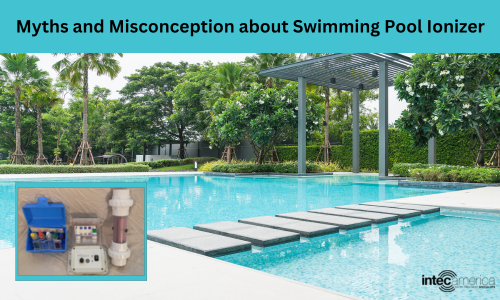
What Does a Pool Ionizer Do?
- Controls algae growth
- Reduces bacteria
- Minimizes chemical usage
- Improves water clarity
6 Common Myths About Swimming Pool Ionizers
These are some common misconceptions about swimming pool ionizers.
- Pool Ionizers Still Require Chlorine: This is one common misconception many of us have. True high-end pool ionizers produce cupric ions and will completely replace the need for chlorine. These are not filters and would require a clarifier or mild oxidant to be added once a week to assist the filter in fine particles. This would address clarity issues related to suspended organic matter, such as sweat and dead algae and bacteria. This misconception often leads people to question does a pool ionizer really work, especially when comparing low-end vs high-performance systems.
- Pool Ionizers Are Not Safe for Swimmers: Another misconception about swimming pools is that they harm swimmers. However, ionizers use transition metals alloys or copper ions. These ions are naturally occurring elements that are not harmful in low concentrations. Technically, silver and copper are commonly used in medical and other applications where human contact is necessary.
- Pool Ionizers Are Expensive: Many people think that pool ionizers are expensive, but this is not always true. The initial cost of purchasing may be slightly higher than other systems; however, in the long term it is the least expensive to maintain the water chemistry. Quality systems cost about the same as a saltwater chlorinator. Ionizers require fewer chemicals and less maintenance than other systems, thus saving pool owners time and money in the long run.
- Pool Ionizers Are Only Effective for Small Pools: Some people believe that pool ionizers are only effective in small pools, but this is not true. Ionizers can be effective in pools of all sizes. Although, larger pools may require more than one ionizer unit to maintain proper water quality. Additionally, ionizers can also be used with other pool maintenance systems, such as ozone generators, to provide additional benefits.
- Pool Ionizers Requires Electricity to Operate: Many people think that pool ionizers require electricity, but this is not always the case. Several types of ionizers are available, including solar-powered ionizers and those that use the flow of water to generate ions. While some ionizers require electricity, it is not required for all systems. The solar ionizers are small and do require the use of chlorine and often will get pulled into skimmers. Inline electrodes are much more effective.
- Pool Ionizers Are Difficult to Install: Many people believe that pool ionizers are challenging to install. However, this is not necessarily true. While a professional is generally recommended for all plumbing and equipment installation, most end users install a system on their own in less than an hour. Additionally, most manufacturers of ionizer systems offer clear instructions in their manual and require minimal installation tools.
Do Pool Ionizers Really Work?
- Yes, pool ionizers release metal ions (like copper) to control algae and bacteria
- They are widely used as a chlorine-free or low-chemical pool sanitation method
- Many pool owners ask: do copper pool ionizers work – the answer depends on system quality and proper usage
- High-quality systems can significantly reduce or eliminate chlorine usage
- Understanding how does a pool ionizer work helps in choosing the right system
Copper Ionizer vs Solar Pool Ionizer: What’s the Difference?
Many pool owners today compare traditional copper ionizers with solar-powered floating ionizers. While both aim to reduce chemical usage, their effectiveness varies significantly.
- How They Work
- Copper Ionizers (Inline Systems):
Installed within the plumbing system, they continuously release controlled copper ions into the water. - Solar Pool Ionizers:
Floating devices powered by sunlight that release ions at a much lower and inconsistent rate
- Performance & Effectiveness
- Copper systems provide consistent ion levels throughout the pool
- Solar ionizers often struggle with:
-Uneven distribution
-Limited ion output
-Dependence on sunlightThis is why many users questioning do copper pool ionizers work find better results with inline systems.
- Chlorine Reduction Capability
- Copper Ionizers: Can significantly reduce or eliminate chlorine
- Solar Ionizers: Usually still require chlorine support
- Maintenance & Reliability
- Copper ionizers are:
-More stable
-Long-lasting
-Less dependent on external conditions
- Solar ionizers:
-Can get trapped in skimmers
-Require repositioning
-Offer inconsistent results
Final Takeaway
While solar ionizers may seem convenient, high-quality copper ionization systems remain the more reliable and effective solution for long-term pool sanitation.
Are Pool Ionizers Worth It?
- Yes, when using high-quality systems
- Best for reducing chemical dependency
- Ideal for health-conscious pool owners
- Most effective when properly installed and maintained
This post clears off most misconceptions around popular copper swimming pool ionizers. Does copper ionizer technology suit your swimming pool? If that sounds yes, choosing the appropriate manufacturer or supplier is also important. Intec America stands tall among its other competitors. With vast years of industry experience in water treatment solutions, the company offers its clients 100% contamination-free and chlorine-free swimming pools. In addition, their in-depth research and efforts also ensure the quality of pool ionizers.
FAQ’s
Q. Do copper pool ionizers work effectively?
Yes, high-quality copper ionizers are proven to control algae and bacteria effectively when properly maintained.
Q. How does a pool ionizer work?
It releases metal ions (typically copper) into the water, which disrupt microorganisms and prevent their growth.
Q. Does a pool ionizer really work without chlorine?
Advanced systems can significantly reduce or eliminate chlorine, but some setups may still require minimal support.
Q. What does pool ionizer do in simple terms?
It sanitizes pool water naturally by preventing algae and bacterial growth.
Recent Blog Posts
- Copper-Silver Ionization Against Biofilm and Plankton Associations
- Cloudy Pool Water Causes and Solutions
- Guide to Eradicate Legionella and Other Water-Borne Bacteria from Your Pool
- Everything You Need to Know About Distilled Water
- Well Water Contamination: Causes, Symptoms and Treatment
- Guide to make rainwater potable
- Know Everything About Rainwater Harvesting
- Microplastics in Drinking Water: Causes and Prevention Overview
- Mercury in Drinking Water – Causes, Effects, and Prevention Explained